
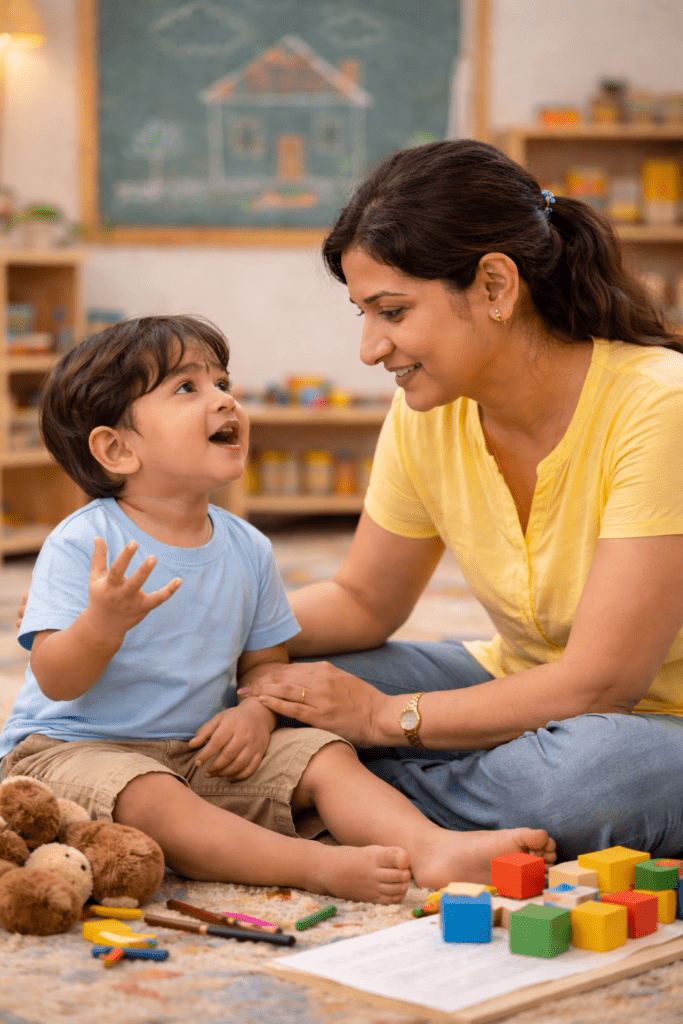

Understanding Toddler Behaviour & Emotional Growth
Toddlers often surprise adults with their intense emotions, endless questions, and sudden mood changes. One moment they are laughing, and the next they are crying over something that seems small.
This behaviour is a natural part of emotional growth and development. At this age, a child’s brain is rapidly developing, especially the areas responsible for emotions, language, and self-control. Toddlers are learning how the world works, and questions are their way of making sense of everything around them.
Asking “why” repeatedly is not stubbornness. It shows curiosity and cognitive growth. Similarly, emotional outbursts happen because toddlers feel deeply but do not yet know how to manage or express those feelings.
“Big emotions in small bodies can feel overwhelming.”
When children cannot find the right words, emotions come out through tears, anger, or frustration.
A mother once shared her experience: “I used to think my child was being difficult. When I understood that he was struggling to express himself, my response changed.” She noticed that when she stayed calm and acknowledged his feelings, the tantrums reduced over time. This shows how adult responses shape emotional development.
Understanding toddler behaviour helps parents raise emotionally secure children. Instead of correcting or silencing emotions, guiding them is more effective. Naming feelings such as happy, sad, angry, or scared helps children understand what they are experiencing. “Children learn emotional control when they feel emotionally safe.”Simple reassurance, eye contact, and patience build trust and confidence.
Toddlers also observe closely. They learn how to react by watching adults. Calm responses teach calm behaviour. Harsh reactions often increase fear or confusion. Emotional growth is closely connected to how supported a child feels during moments of distress.
Every child develops at their own pace. Some toddlers are expressive, while others are quieter but still processing emotions internally. Growth is not just physical. Emotional development shapes empathy, relationships, and communication skills for life. “Raising a child is not about controlling behaviour, but about understanding it.”
By responding with empathy, consistency, and warmth, parents help toddlers grow into emotionally aware and confident individuals. These early experiences create a strong foundation for healthy emotional development, helping children understand themselves and others as they grow.
Local Pre-School & Admission Searches: What Parents Look for Near Panchkula and Chandigarh
When children reach the age for early schooling, most parents find themselves typing similar questions into Google.
Which is the best pre-school?
What is the right age for nursery admissions?
Which schools near you actually focus on learning and not just routines?
For families living near Panchkula or Chandigarh, these searches are not just about proximity. They are about trust.
Many parents today look beyond academics when choosing a school. Their focus is on the overall development of their child, not just marks or textbooks. Some of the most common expectations parents have include:
Strong sports facilities that support physical development, including structured options like a cricket academy, basketball academy, skating, and taekwondo. Parents want children to explore sports early and discover natural strengths.
Experienced teachers who understand child psychology and guide learning patiently, especially in playway, nursery, kindergarten, and early primary years.
A learning approach based on multiple intelligence, where children learn concepts through real-life experiences, activities, movement, and interaction, not just rote learning.
Classrooms where students perform first and then learn, helping them understand basics through doing, questioning, and observing.
Data-based assessments that track a child’s strengths across subjects, sports, creativity, music, and arts, instead of judging everyone by the same academic scale.
Clear feedback for parents on what the child is naturally good at, whether it is numbers, language, sports, creativity, or expression, helping families support the child better at home.
Safe spaces, warm classrooms, and a caring environment where emotional needs are respected and children feel confident to express themselves.
Early education plays a key role in shaping how a child thinks, communicates, and adapts. This is why parents carefully compare playway, nursery, kindergarten, Class 1 to 10, and day care options before finalizing admissions. The goal for most families is simple: a school that understands children as individuals and supports them in growing confidently, academically, physically, and emotionally.
Admission criteria is another major concern. Parents often search for clear information on age limits, learning approach, class strength, and how children are supported during the transition from home to school. Transparency matters. Schools that clearly explain their admissions process tend to build confidence early with parents.
A growing number of families now look beyond academics. Keywords like holistic development and overall development of a child are becoming common in searches. Parents want schools that balance learning with play, creativity, movement, and social interaction. This approach helps children enjoy learning instead of fearing it.
Location also plays a role. Searches such as best kindergarten school near Panchkula, schools near Tau Devi Lal Stadium, or institutions in Sector 21 Panchkula are common. Convenience matters, especially for working parents managing daily routines.
Some parents also explore long-term continuity. They prefer early schools that align well with higher education systems, including those connected to or following standards of a best CBSE school. This reduces stress later during transitions.
Schools like Sky World School often appear in local admission searches because parents want familiar names, accessible campuses, and a clear learning philosophy. However, the real decision usually comes down to how well a school understands children.
Admissions open seasons bring urgency, but choosing a pre-school should never feel rushed. A calm visit, honest conversations, and observing how children interact in the environment can make all the difference. After all, the right start builds confident learners for life.
The right school doesn’t try to change a child. It helps the child discover who they already are.”
Parenting Tips and Strategies for Toddlers
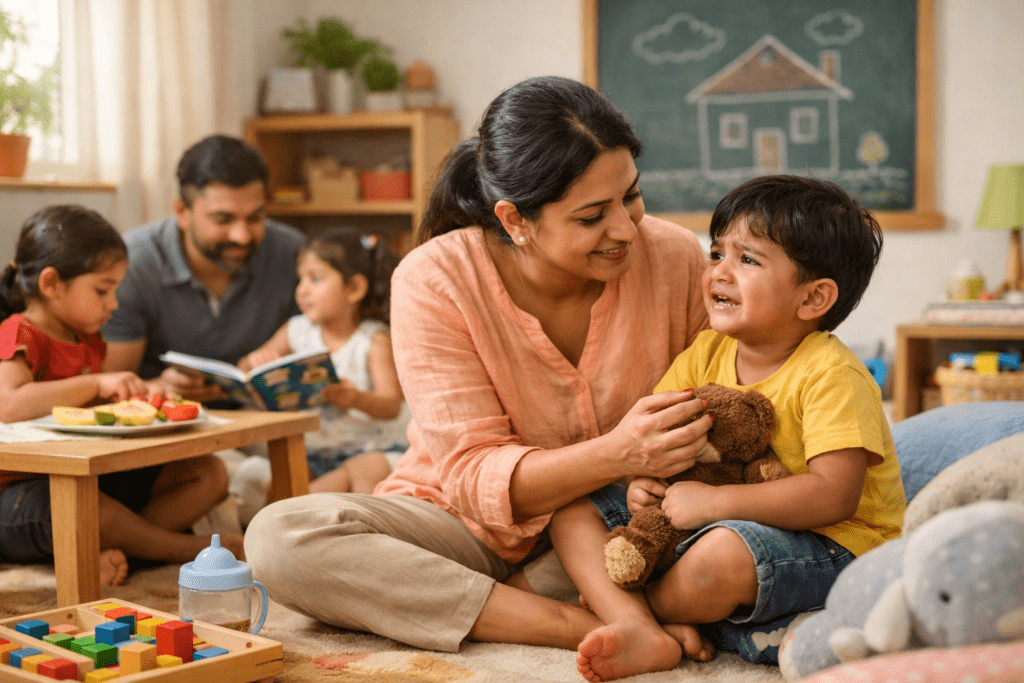
The toddler years are beautiful, confusing, and sometimes exhausting. One moment your child is laughing, the next they are on the floor with a full-blown tantrum. This phase is normal. Toddlers are learning how to express emotions they do not yet fully understand.
Handling tantrums starts with staying calm. Tantrums are not bad behavior, they are emotional overload. A quiet presence, simple words, and comfort work better than shouting or punishment. Naming emotions helps. Saying “I know you are upset” teaches emotional awareness over time.
Nutrition plays a big role in mood and energy. Toddlers need balanced meals with fruits, vegetables, grains, and proteins. Avoid forcing food. Offering choices builds independence and healthy habits early.
Sleep routines are often overlooked but are essential. Fixed sleep times, no screens before bed, and a calm bedtime ritual help toddlers feel secure. Good sleep supports focus, emotional balance, and overall development of a child.
Positive discipline means guiding, not controlling. Clear boundaries, consistency, and gentle correction teach responsibility. Discipline works best when children feel safe, not scared.
Emotional development grows when children are allowed to talk, play, move, and imagine. This is where holistic development and multiple intelligence naturally come into play.
Many parents exploring admissions look for playway, nursery, kindergarten, or day care options that understand these needs. Whether searching for the best kindergarten school, a best CBSE school near Panchkula, or simply schools near you, experienced teachers matter. They support learning beyond books and focus on the child as a whole.
Strong foundations in early years shape confident, balanced learners for life.
This idea is explained through the concept of Multiple Intelligence, which focuses on using a child’s natural strengths to support learning. When learning matches how a child’s brain works, it stays with them for a much longer time.
Traditional learning often relies mainly on reading, writing, and memorization. Multiple Intelligence takes a broader approach. It includes language skills, logical thinking, visual understanding, physical movement, music, social interaction, self-awareness, and learning through nature. When children learn through more than one method, they do not just remember answers, they understand ideas.
“Children remember what they experience, not what they are forced to memorize.”
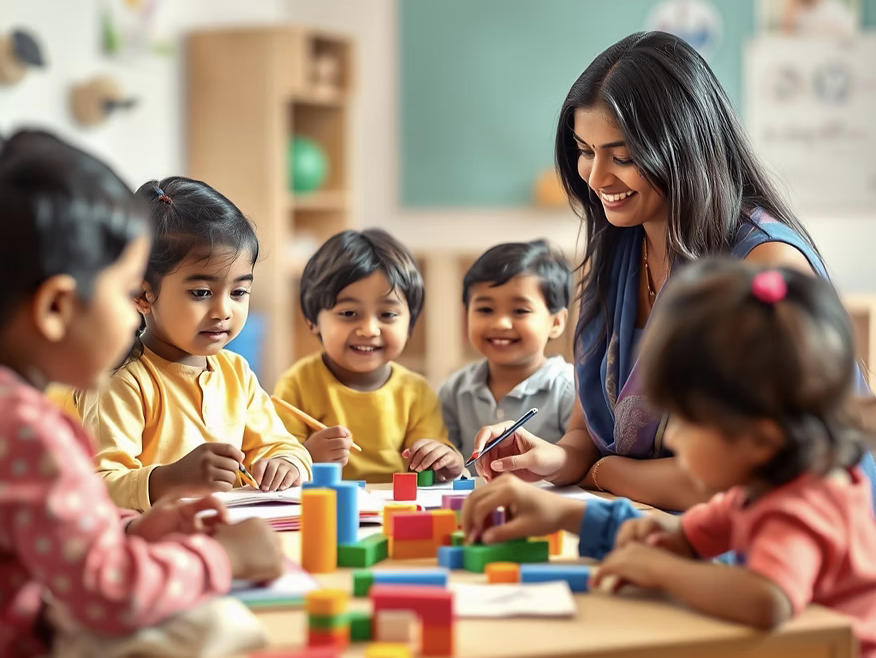
For example, in playway, nursery, and kindergarten years, children may learn numbers through games, role play, storytelling, or hands-on activities. Instead of repeating facts, they explore concepts. These experiences create strong memory connections, which is why learning stays with them even years later.
This approach supports holistic development and the overall development of a child. It helps children build confidence, creativity, communication skills, emotional balance, and problem-solving abilities. Learning becomes joyful rather than stressful, which naturally improves attention and curiosity.
Today, many parents searching for admissions look for schools near you that focus on meaningful learning. Whether it is a day care, the best kindergarten school, or a best CBSE school near Panchkula, parents value experienced teachers who understand child behavior and use activity-based learning.
Multiple Intelligence is not about teaching more content. It is about teaching smarter. When children learn through their strengths, education becomes deeper, more enjoyable, and truly long-lasting.